
Pick the wrong country and you could spend two years and 80,000 dollars with nothing legally enforceable at the end. Pick the right one, and the entire process is protected at every step. That gap is the point of this guide.
Surrogacy in different countries is not a minor variable. It determines
- whether your parental rights exist before birth or after,
- whether a court needs to get involved,
- whether compensation to the surrogate is legal,
- and whether same-sex couples and single parents have access at all.
No country is perfect for every family. But one of them is probably right for you.
What Does a Surrogacy-Friendly Country Mean?
A genuinely surrogacy-friendly country has written law, established court precedent, or both, and uses that framework to protect intended parents, not just acknowledge surrogacy exists.
Legal Recognition of Intended Parents
In the best-case scenario, the birth certificate names the intended parents from the moment the baby is born. Countries like Ukraine and some US states have achieved this.
On the other end of the spectrum, countries like the UK, where surrogacy is technically legal, but the surrogate is the legal mother until a parental order is granted post-birth. That order usually comes through, but the period of legal uncertainty is real. Most families do not think about this distinction until they are in it.
Availability of Gestational Surrogacy
Gestational surrogacy, where the surrogate uses a transferred embryo and has no genetic link to the child, is the standard in every reputable program. Traditional surrogacy, where the surrogate is also the biological mother, creates vastly more legal risk and is no longer practiced in established commercial programs. When evaluating surrogate mother countries, the first question to confirm is whether gestational surrogacy is the default, not an option offered alongside traditional arrangements.
Protection of Contracts
A signed contract in a country where surrogacy agreements are unenforceable is a document, not protection. Surrogacy friendly countries enforce surrogacy contracts in court. That means that if a surrogate breaches an obligation, or if intended parents attempt to exit a program mid-process, there is a legal mechanism to resolve the issue. Without that, everything rests on goodwill and trust, which, over a 12-month program with tens of thousands of dollars at stake, is not a sufficient foundation.
Access for International Parents
Some surrogacy countries reserve access for their own citizens, others technically permit foreigners but quietly impose requirements that are effectively impossible to meet from abroad.
Medical Infrastructure
The clinical side matters as much as the legal side. A country with a clear surrogacy law but no reliable IVF infrastructure is still a risk. Look for clinics with their own embryology lab, in-house obstetric teams, and published outcome data. The best programs publish actual blastulation rates and live birth figures.
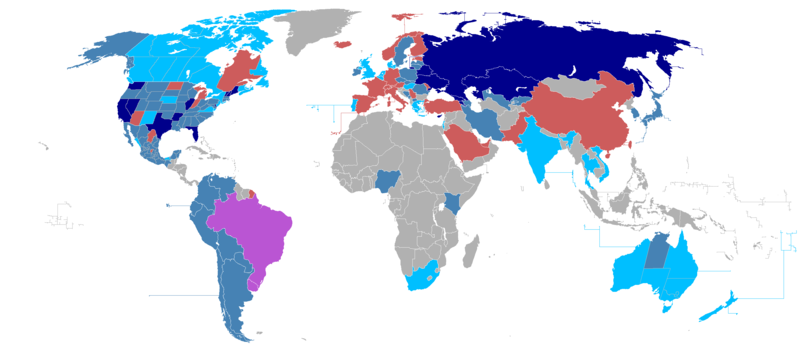
Surrogacy and Legal Regulation Around the World
The global picture is fragmented. There is no international treaty on surrogacy and every country sets its own rules, which can change. For example, India and Thailand demonstrated in 2015 when both restricted or ended commercial surrogacy for foreigners.
Countries Where Surrogacy Is Fully Legal
A small set of countries has explicit legislation that supports gestational surrogacy and gives intended parents a clear pathway to legal parentage.
- The United States in surrogacy-friendly states
- Ukraine
- Georgia
- Greece under specific conditions
- Colombia
- and certain Mexican states.
These are the only countries that can honestly be described as top surrogacy countries for international families.
Countries With Partial or Regulated Surrogacy
Canada allows altruistic surrogacy but bans commercial surrogacy under the Assisted Human Reproduction Act. The practical effect is a smaller, slower-matching surrogate pool.
Some Australian states permit altruistic arrangements.
The UK allows surrogacy but makes contracts unenforceable, relying instead on post-birth parental orders.
These are workable in many cases but carry legal uncertainty that commercial destinations avoid.
Countries Where Surrogacy Is Restricted or Illegal
France, Germany, Italy, and Spain prohibit surrogacy entirely.
Thailand and India — once among the most active commercial surrogacy destinations in the world — closed to foreign intended parents following legislative changes in 2015 and 2021, respectively.
Any program currently offered in these countries to foreign families exists outside the legal framework and provides no enforceable protection.
Commercial vs Altruistic Surrogacy Differences
Commercial surrogacy means the surrogate receives payment in addition to expense reimbursement.
Altruistic means she is reimbursed only for direct pregnancy-related costs.
Сommercial programs produce larger, more accessible surrogate pools and faster matching. Altruistic-only countries like Canada have longer timelines, fewer candidates, and more reliance on social networks to find willing surrogates. Neither model is morally superior, but for families on a timeline, it matters.
Best Countries for Surrogacy
United States
Surrogacy in the US operates at the state level, which creates variation, but in California, Nevada, Illinois, Washington, and New Jersey — the most established surrogacy friendly states — the framework is as solid as reproductive law gets anywhere in the world.
- Pre-birth parentage orders are routine.
- All family structures are permitted.
- The surrogate pool is large and professionally screened.
- The newborn is a US citizen by birth.
Average Cost
Total program costs in the US range from $100,000 to $150,000. That covers surrogate compensation — typically $30,000 to $60,000 depending on the state and the surrogate’s experience — plus agency fees, legal fees, and medical costs.
High-demand markets like California often push programs past $200,000 with base compensation, bonuses, insurance, and multiple clauses.
Surrogacy Programs in the US
Most programs are managed by agencies that specialize in matching, medical coordination, and legal management. The quality varies enormously. An agency that has been operating in California for 15 years with a documented surrogate screening process is a fundamentally different product from a new agency claiming it can coordinate a program in any state.
ADONIS Fertility Solutions supports international intended parents pursuing US surrogacy through its US coordination office.
Surrogacy Laws
Surrogacy is not federally regulated. California and Nevada have explicit statutes supporting compensated gestational surrogacy for all family structures.
Michigan makes contracts void.
Most other states fall somewhere between those two extremes, with outcomes depending on county, judge, and attorney. Pre-birth orders are available in most surrogacy-friendly states and are the strongest available legal protection.
Pros
+ Strongest legal protections globally in surrogacy-friendly states — pre-birth parentage orders, enforceable contracts, clear statutes
+ All family structures permitted in leading states — same-sex couples, single parents, unmarried couples
+ Newborn receives US citizenship at birth
+ Large, professionally screened surrogate pool with faster matching than altruistic destinations
Cons
– Highest costs of any destination — 100,000 to 150,000 dollars is the standard range
– Legal outcome depends on the state where the surrogate lives, not where the intended parents are based
– International intended parents face additional complexity: home country citizenship, recognition of the US birth certificate, and embassy procedures
Canada
Canada works. It is slower than commercial destinations and limits you to altruistic arrangements, but the legal framework is established, most provinces grant pre-birth orders, and the country is genuinely open to all family structures.
For families with extended timelines or a network that might produce a willing altruistic surrogate, Canada is a strong option.
Average Cost
Total costs typically fall between $50,000 and $100,000. No commercial surrogate compensation, which reduces the baseline, but agency fees, legal work, and medical costs are comparable to those in the US.
The actual spend depends heavily on the surrogate’s reimbursable expenses across a 40-week pregnancy.
Surrogacy Programs in Canada
Canadian programs rely on finding genuinely altruistic surrogates — women who choose this without financial incentive. That is a smaller pool than commercial programs produce. Matching timelines of 12 to 24 months before the medical phase begins is common. Some agencies specialize in this matching and have developed networks of experienced altruistic surrogates who have done this before.
Surrogacy Laws
The Assisted Human Reproduction Act prohibits commercial surrogacy at the federal level. Altruistic surrogacy is legal.
Parentage processes vary by province: Ontario, British Columbia, Alberta, and Manitoba have well-established pre-birth order procedures. Quebec has its own civil law tradition and a somewhat different process.
Pros
+ Well-established legal framework with clear parentage pathways across most provinces
+ Open to all family structures — same-sex couples, single parents, unmarried couples
+ Bilingual support — English and French-speaking coordination available
Cons
– Commercial surrogacy is banned — the surrogate pool is smaller and matching takes longer
– Timelines are substantially longer than commercial surrogacy destinations
– Provincial variation in legal procedures creates inconsistency
Ukraine
For married heterosexual couples with a documented medical indication, Ukraine is arguably the best country for surrogacy by:
- legal clarity,
- program cost,
- clinical quality.
Intended parents are named on the birth certificate from birth with no court order required. The surrogate has no parental rights. Compensated surrogacy is fully legal.
Average Cost
Programs through ADONIS Fertility Solutions start at 45,000 dollars for families bringing existing embryos, and go up to 76,000 dollars for the unlimited program with live birth protection. These are fixed-price packages with no hidden additions.
Surrogacy Programs in Ukraine
ADONIS offers four programs in Ukraine:
- FET,
- BASIC,
- GUARANTEED,
- UNLIMITED.
Each adds a layer of financial protection — more donor cycles covered, more transfer attempts, broader guarantee.
ADONIS Medical Group operates its own embryology laboratory, maternity hospital, and cryobank. Medical, legal, and coordination are all in-house. No outsourcing of critical steps to separate providers.
Surrogacy Laws
Ukraine’s Family Code permits gestational surrogacy for married couples where at least one partner is genetically connected to the embryo, and there is a documented medical reason for using a surrogate.
Commercial surrogacy is legal. The surrogate signs a notarized agreement before any medical procedure begins and has no parental rights.
Intended parents are listed on the birth certificate from birth, and no additional court action needed. This is one of the clearest legal positions among all surrogacy countries.
Pros
+ Clearest automatic legal parentage at birth — no court process, no waiting period
+ Fully commercial — well-established surrogate pool with faster matching than altruistic destinations
+ Significantly lower costs than US programs with comparable clinical infrastructure
+ ADONIS runs medical, legal, and coordination in-house with no outsourcing of critical steps
Cons
– Restricted to some couples — same-sex couples, single parents, and unmarried couples are not eligible
– Post-birth exit procedures require embassy coordination in Kyiv to obtain the newborn’s passport
Georgia
Georgia runs on a similar legal model to Ukraine — explicit statute, commercial surrogacy permitted, automatic parentage at birth. It costs less and has a shorter track record with international families.
Average Cost
Programs typically cost between $ 35,000 and $ 60,000, including egg donation. The cost advantage over Ukraine is real, but it narrows when you factor in the logistics of a less established international coordination network.
Surrogacy Programs in Georgia
Private clinics in Tbilisi are the main providers. Some offer full in-house medical and legal management, others coordinate through separate legal firms and partner clinics. Verify which model applies before committing.
Surrogacy Laws
Georgia’s Law on Healthcare explicitly permits gestational surrogacy for married couples.
- At least one intended parent must be genetically connected to the embryo.
- The surrogate has no parental rights.
- Intended parents go on the birth certificate at birth.
- Commercial surrogacy is legal.
- Same-sex couples and single parents are not eligible.
Pros
+ Explicit legal framework — commercial surrogacy permitted, parentage at birth
+ Lower costs than Ukraine with a structurally similar legal model
Cons
– Restricted to some couples
– Less established international infrastructure and track record than Ukraine or the US
– Clinic quality varies more than in countries with longer histories of regulated programs
Mexico
Mexico is where families go when they cannot access Ukraine or Georgia. Same-sex couples, single parents, and unmarried heterosexual couples, all of whom are excluded from Ukraine’s strict eligibility requirements, have options in Mexico.
The trade-off: higher costs and a state-level legal framework that is less uniform than a single national statute.
Average Cost
ADONIS Mexico programs range from 56,900 dollars for the FET program to 103,900 dollars for the GUARANTEE 100% program, which includes a pre-birth court ruling, housing for the surrogate in Cancún, and accommodation for the intended parents.
More comprehensive than the Ukraine programs, reflected in the price.
Surrogacy Programs in Mexico
ADONIS offers four Mexico programs delivered at a private hospital in Cancún:
- FET Comfort,
- Comfort Program,
- All-Inclusive,
- GUARANTEE 100%.
The top-tier GUARANTEE 100% program covers unlimited transfer attempts and includes a court ruling obtained before birth that assigns parental rights. It is the strongest legal protection available in the Mexico program range.
Surrogacy Laws
Mexico regulates surrogacy at the state level. Laws vary by state, and in some states, the legal basis rests on case law rather than explicit statute. In states where ADONIS operates, programs for same-sex couples and single intended parents are legally viable.
Pros
+ Open to same-sex couples and single intended parents — the largest eligibility of any top destination
+ Tiered program structure from basic access to full live birth guarantee
+ ADONIS manages the entire program in-house
Cons
– Higher base costs than Ukraine — 56,900 dollars minimum versus 45,000 dollars
– State-level legal variation means the framework is less uniform than that of Ukraine or Georgia’s national statutes
– Pre-birth court ruling is only included in the most expensive program tier
Colombia
Colombia is the budget option among established destinations. Programs start at 30,000 dollars. Colombian surrogacy rests on Constitutional Court rulings rather than written legislation, but those rulings are real, and experienced reproductive law attorneys in Bogotá have successfully navigated parentage for international families.
Average Cost
30,000 to 55,000 dollars is the typical range. Egg donation programs and additional legal complexity can push this higher, but the baseline is the most accessible among viable destinations for international intended parents.
Surrogacy Programs in Colombia
Programs operate through private IVF clinics in Bogotá and Medellín. Quality and legal expertise vary significantly. The key differentiator is whether the clinic works directly with attorneys who specialize in surrogacy: not general family law, not immigration law, but reproductive law specifically.
Surrogacy Laws
Colombia has no explicit surrogacy statute as of 2026. Constitutional Court rulings recognize altruistic surrogacy. Compensated surrogacy exists in practice and is not explicitly prohibited, but the legal basis is less certain than in countries with written legislation. Parentage proceedings vary case by case.
Pros
+ Lowest cost among established, currently viable destinations
+ Accessible for a range of family structures, including same-sex couples
Cons
– No explicit surrogacy statute — legal protection rests on court precedent, which is less predictable than written law
– Program quality varies substantially between providers — due diligence on the clinic and the legal team is essential
Greece
The only European Union country with explicit surrogacy legislation. That is significant for European intended parents who want to keep the birth within the EU legal framework.
The restriction: residency or citizenship requirement for at least one party. Most international families from outside Europe cannot meet this condition without establishing genuine Greek residency.
Average Cost
40,000 to 65,000 dollars covering IVF, surrogate compensation at altruistic rates, legal fees, including the mandatory court authorization, and coordination.
Surrogacy Programs in Greece
Programs are offered by IVF clinics in Athens and Thessaloniki. Because Greek law requires court authorization before embryo transfer, the legal phase occurs before the medical phase, adding 2 to 4 months to the start of the timeline.
Surrogacy Laws
Greece permits altruistic gestational surrogacy by court authorization. A court order must be obtained before any medical procedure begins. The surrogate must be under 50 years old and cannot use her own eggs. The intended mother’s eggs must be used wherever medically possible. At least one party — surrogate or intended parent — must reside in Greece, or the intended mother must be a Greek citizen. Intended parents are recognized as the legal parents from birth following court authorization.
Pros
+ Explicit surrogacy legislation within an EU country — relevant for European families wanting EU legal framework
+ Intended parents recognized as legal parents from birth following court authorization
Cons
– Residency or citizenship requirement effectively excludes most non-European international intended parents
– Altruistic-only — no commercial compensation, smaller surrogate pool
– Court authorization adds 2 to 4 months before the medical phase can begin
Thailand
Thailand was one of the busiest commercial surrogacy destinations in Asia through the early 2010s. Then in 2015, two separate cases — one involving a baby with Down syndrome allegedly abandoned by his intended parents, one involving a Japanese man who had fathered over a dozen children through Thai surrogates — prompted legislative action. Commercial surrogacy for foreign intended parents is now prohibited.
Average Cost
There is no standard legal program to price. Any offering from a Thai provider to foreign intended parents currently exists outside the legal framework and cannot be enforced in Thai courts.
Surrogacy Programs in Thailand
No legally compliant commercial surrogacy programs for foreign intended parents operate in Thailand. The country is included here because it appears frequently in historical research and some providers still reference it — but families who commit to informal Thai programs have no legal recourse.
Surrogacy Laws
Thailand’s Protection of Children Born from Assisted Reproductive Technology Act, enacted in 2015, prohibits commercial surrogacy. Altruistic surrogacy for Thai citizens is regulated. Foreign intended parents have no legal route to gestational surrogacy in Thailand. Thailand is no longer one of the surrogacy friendly countries for international families.
Pros
+ Strong IVF medical infrastructure exists — relevant if legislation changes in the future
Cons
– Commercial surrogacy for foreign intended parents has been prohibited since 2015
– No enforceable legal protection available for international families
– Not a current viable destination — included here as historical context only
India
India had the largest commercial surrogacy industry in the world through the 2000s and early 2010s. Costs were low — sometimes under 20000 dollars — and thousands of international families used Indian programs annually. That industry is gone. India restricted foreign access in 2015 and moved to a fully domestic-only altruistic model under legislation that came into full force in 2022.
Average Cost
Commercial surrogacy for foreign intended parents is not legally available in India. The Surrogacy Regulation Act now restricts surrogacy to Indian married couples with a medical necessity, using a close relative as an altruistic surrogate.
Surrogacy Programs in India
No internationally accessible program exists under current Indian law. India is included in this guide because of its historic prominence — families researching surrogacy will encounter it repeatedly in older sources — but it is not a current option for international intended parents.
Surrogacy Laws
India’s Surrogacy Regulation Act, in full effect since 2022, permits only altruistic surrogacy for Indian married couples with a documented medical indication. The surrogate must be a close relative. Commercial surrogacy is prohibited. Foreign intended parents have no legal pathway.
Pros
+ High concentration of experienced IVF clinicians — relevant if the legislative framework changes
Cons
– Commercial surrogacy for foreigners has been banned since 2015, domestic-only altruistic surrogacy since 2022
– No current legal pathway for any international intended parents
How to Compare Surrogacy Countries
The table below compares the nine destinations covered in this guide across the factors that matter most for international intended parents choosing between surrogacy in different countries.
| Country | Legal Type | Eligibility | Min Cost | Pre-Birth Order | Same-Sex | Single Parents | International |
| USA | Commercial / Altruistic | All family structures — state-dependent | $80,000+ | Yes, most states | Yes | Yes | Yes |
| Canada | Altruistic only | All family structures — varies by province | $50,000+ | Yes, most provinces | Yes | Yes | Yes |
| Ukraine | Commercial | Married heterosexual couples only | $43,840 | Yes | No | No | Yes |
| Georgia | Commercial | Married heterosexual couples only | $35,000 | Yes | No | No | Yes |
| Mexico | Varies by state | Wider range incl. same-sex, single parents | $56,900 | Top program only | Yes | Yes | Yes |
| Colombia | Court-based | Wider range in practice | $30,000 | Varies | Yes | Yes | Yes |
| Greece | Altruistic, court-authorized | Greek resident or citizen + medical indication | $40,000 | Yes | No | No | Limited |
| Thailand | Restricted | Not available for foreign intended parents | N/A | N/A | N/A | N/A | No |
| India | Restricted | Not available for foreign intended parents | N/A | N/A | N/A | N/A | No |
How to Choose the Best Country for Surrogacy
Start with eligibility, not cost.
If you are a same-sex couple or single parent, Ukraine and Georgia are immediately off the list. Mexico, through ADONIS, the US, Canada, and Colombia are the viable options.
If you are a married heterosexual couple, eligibility opens up to all the commercially viable destinations, and cost becomes the primary differentiator.
For married heterosexual couples choosing between Ukraine and Georgia:
- Ukraine has better-established international infrastructure, more integrated clinical programs, and a longer track record of working with families from the US, the UK, and other major markets.
- Georgia costs slightly less but requires more due diligence on individual clinic quality.
For families who need the widest eligibility at a cost below the US: Mexico through ADONIS is the best-structured option. You get a tiered program with a pre-birth court ruling available at the top tier, a hospital delivery in Cancún, and the same integrated in-house model as the programs in Ukraine.
For families where cost is the primary constraint, Colombia offers the lowest entry point among currently viable destinations. The weaker legal framework is a real trade-off and requires experienced local legal counsel to navigate successfully.
Risks of Choosing the Wrong Surrogacy Country
The worst outcomes in international surrogacy are almost always traceable to a jurisdiction problem. They have happened in Thailand before the 2015 ban, in countries operating in legal grey zones, in programs where families trusted an agency’s claim that the legal situation was manageable without independent verification from a reproductive law attorney in the destination country.
The financial risk is also significant. A program in a country without explicit surrogacy legislation can collapse mid-way when a clinic closes, a legal challenge arises, or a surrogate’s rights under local law create a dispute that the contract cannot resolve. The cost of starting over — legally, medically, emotionally — is enormous.
The simplest risk management strategy: choose one of the top surrogacy countries with explicit written legislation, a documented track record of completed programs with families from your country, and an integrated clinic that manages legal and medical functions under the same roof.
FAQ
What Is the Best Country for Surrogacy?
There is no single best country for surrogacy that works for every family. For married heterosexual couples, Ukraine offers the strongest combination of legal clarity, program cost, and clinical quality — parentage is automatic at birth, programs start at 43840 dollars, and the medical infrastructure is well-developed. For same-sex couples and single parents, the US in surrogacy-friendly states offers the broadest legal protections, but at significantly higher cost. Mexico, through ADONIS, is the strongest option for non-traditional family structures that cannot access Ukraine and want to stay below US pricing.
Which Countries Are the Most Surrogacy-Friendly?
The most surrogacy friendly countries for international intended parents are the United States in its leading states, Ukraine, Georgia, and Mexico, in relevant states. These destinations combine explicit legal frameworks, commercial surrogacy permitted, and access for international families. Canada is also surrogacy-friendly but restricted to altruistic arrangements. Greece is surrogacy-friendly within Europe but the residency requirement limits access for most international families.
What Is the Most Affordable Surrogacy Country?
Colombia offers the lowest program costs at 30000 to 55000 dollars, but with a weaker legal framework. Georgia, at 35000 dollars minimum, offers a stronger explicit legal basis. Ukraine through ADONIS at 43840 dollars minimum combines the lowest cost among top surrogacy countries with explicit statute and automatic parentage at birth. Thailand and India were historically the cheapest options but are no longer viable for foreign intended parents under current law.
In Which Countries Is Surrogacy Available to the LGBTQ+ Community?
Same-sex couples can pursue surrogacy in the United States in most surrogacy-friendly states, Canada across most provinces, Mexico through ADONIS, and Colombia. Greece does not permit surrogacy for same-sex couples under current law. Ukraine and Georgia restrict eligibility to married heterosexual couples.
In Which Countries Is Surrogacy Available to Single Women?
Single women can access gestational surrogacy in the United States, Canada, Mexico through ADONIS, and Colombia. In the US, single intended mothers can use their own eggs or donor eggs in virtually all surrogacy-friendly states. Ukraine and Georgia require a married couple.
In Which Countries Is Surrogacy Available to Single Men?
Single men can pursue gestational surrogacy combined with egg donation in the United States, Mexico through ADONIS programs, and in most Canadian provinces. Colombia also allows access in practice. Ukraine and Georgia require married couples and are not available to single intended parents of either gender.
In Which Countries Is Surrogacy Available to Unmarried Couples?
Unmarried heterosexual couples have access to surrogacy in the United States in most surrogacy-friendly states, Canada, Mexico through ADONIS, and Colombia. Ukraine and Georgia legally require the intended parents to be married and have a documented medical indication. For unmarried couples weighing which country is best for surrogacy, Mexico through ADONIS provides the most structured program with the clearest legal support among the top surrogacy countries that permit unmarried couples.