Key Takeaways
A gestational surrogate carries the pregnancy but does not contribute any genetic material to the baby. The entire question is whether the surrogate passes DNA to the baby. This is a simple enough explanation of gestational surrogacy for a dinner table.
The genetics of surrogacy are explained plainly below. Everything covers why it happens and what it means for blood, appearance, and legal parentage.
Does a Surrogate Mother Share DNA With the Child in the Case of Gestational Surrogacy?
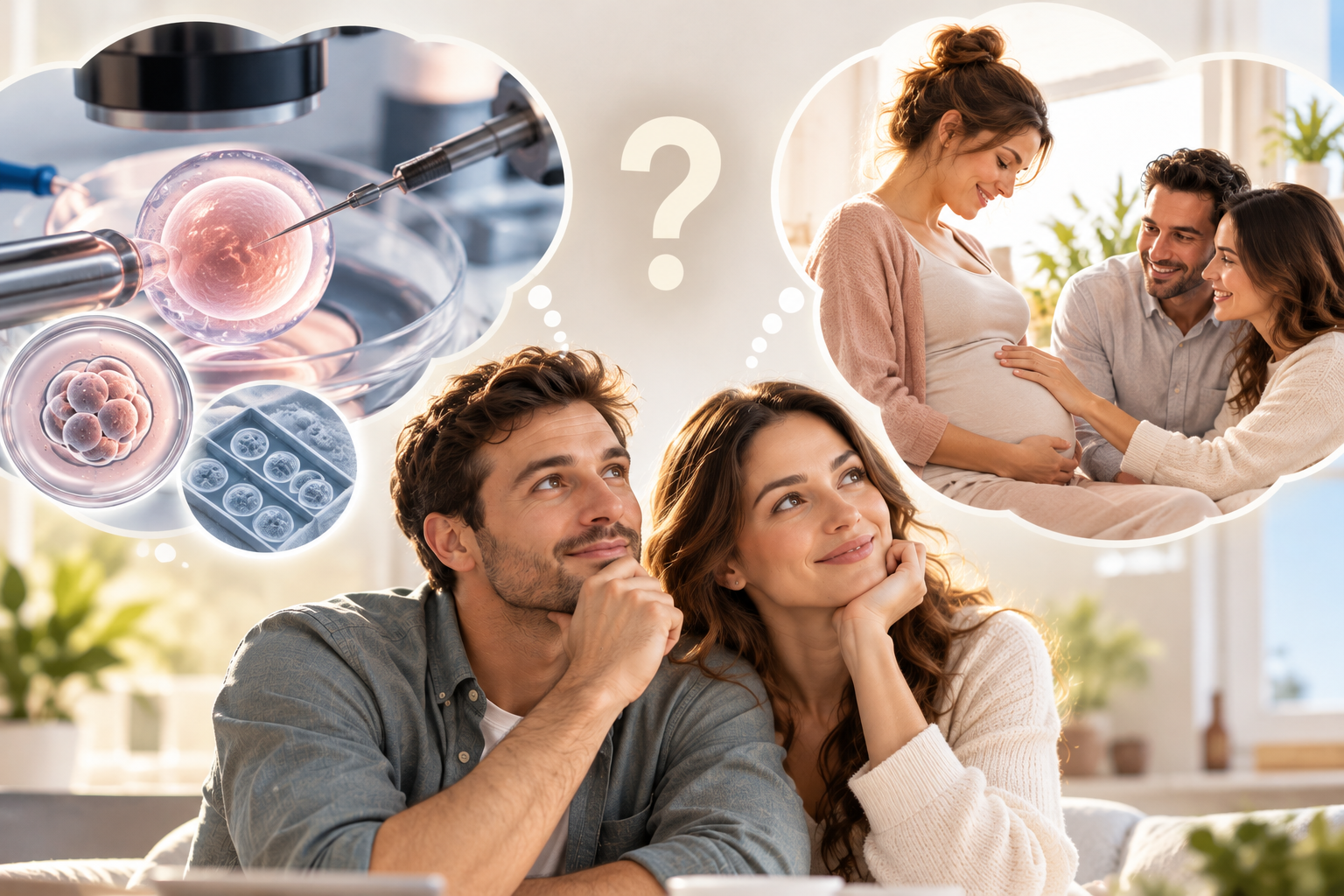
This is where it actually happens biologically. Through IVF, the intended mother’s or an egg donor’s egg is fertilized with the intended father’s or a sperm donor’s sperm to create the embryo. That combination happens in a lab dish, days or sometimes weeks before transfer.
So does a surrogate mother share DNA with the baby she ends up carrying? No, and there is a clean biological reason for it, not just a legal one.
People search this exact question in a dozen different ways, and it is worth saying plainly once: do surrogates pass on DNA to the children they carry? They cannot.
Do surrogate mothers pass on DNA at any later stage, once the pregnancy is underway? No — the window for that closed at fertilization, before she was ever medically involved.
Why the Gestational Carrier Does NOT Contribute DNA
Timing is everything here. Fertilization — the actual combining of genetic material — happens in a lab, before the surrogate is medically involved at all. That is the whole gestational carrier DNA explanation in one sentence. By the time the embryo reaches her uterus, its genetic code is finished.
Does the surrogate mother have DNA in the resulting baby, in any amount? No, and there is no biological back door for that.
Does a surrogate pass on DNA after the fact, once pregnant? No — the process runs one direction only.
Does baby inherit DNA from surrogate at any later point? No, regardless of how long the pregnancy runs.
Does a Surrogate Mother Share DNA With the Baby?
In Traditional Surrogacy?
This is the one scenario where the answer flips. In traditional surrogacy, the surrogate’s own egg gets fertilized — meaning she is genetically the biological mother of the resulting child.
Do surrogates share DNA with the baby under this specific model? Yes, entirely, because she is both the carrier and the genetic source.
Does a surrogate share DNA with the baby in the arrangement most agencies now use? No — almost everyone has moved to the gestational model specifically to avoid this genetic entanglement.
When Surrogate Is Also Egg Provider
When a woman is both surrogate and egg donor — the traditional model — she is related to the baby exactly the way any biological mother is related to her child.
Modern gestational programs, including every ADONIS program, do not mix these roles. The surrogate and the egg source are always two different people.
Genetic vs Gestational Definition
Genetic parentage is whose egg and sperm formed the embryo — the embryo’s genetic origin, in other words. Gestational parentage is who carries it. So in surrogacy, who is the biological mother, and who is related to the baby in surrogacy at all? Whoever’s egg was used, full stop — not whoever happened to carry the pregnancy.
Biological mother in surrogacy is a phrase people misuse constantly, usually assuming it means the carrier. It does not. It means the egg source, every time, regardless of who gave birth.
Does a Surrogate Share Blood With the Baby During Pregnancy?
Does a surrogate mother share blood with the baby she carries? Not in the way most people picture it. Maternal and fetal blood stay in two separate closed systems during a normal, healthy pregnancy — they never actually mix.
What Really Happens Between a Surrogate Mother and the Fetus
The surrogate’s body supplies oxygen and nutrients across the placental barrier. The fetus’s blood circulates entirely within its own closed loop, connected through the umbilical cord. Small amounts of fetal cells can occasionally drift into maternal circulation and back — but do surrogates share blood with the baby in any medically meaningful sense? No, that minor cellular crossover does not amount to shared blood type or shared genetics.
Why Blood Is NOT Directly Shared
There is a reason for that separation. The placental barrier exists specifically to stop two people with potentially incompatible blood types from mixing blood directly. This barrier is standard in every human pregnancy — surrogacy or not — so nothing about the arrangement itself changes basic human biology.
Will the Baby Look Like the Surrogate Mother?
Will the baby look like the surrogate mother? No. Eye color, hair texture, facial structure — all of it traces back to whoever provided the egg and sperm. Carrying the pregnancy has nothing to do with appearance.
Does a surrogate mother share DNA that could explain a family resemblance later on? No — any resemblance is coincidence, not biology.
What Determines Physical Appearance
The genetic code locked in at fertilization is what governs appearance, and nothing that happens afterward changes it. Do surrogate babies look like the surrogate in any statistically real way? About as much as any two strangers resemble each other — coincidence, at best, not biology.
If you have a surrogate, is the baby your DNA? Yes, assuming your own egg or sperm was used. Whatever resemblance shows up later belongs to you, your partner, or a donor. Never her.
Can a Surrogate Influence the Baby Biologically?
Does a surrogate have DNA that influences the baby through some indirect channel, even without a direct genetic link? Zero genetic contribution does not mean zero influence at all.
Nutrition, prenatal care quality, overall maternal health — these shape birth weight and some developmental outcomes through epigenetics and environment, not genetics. It will not change hair color, eye color, or a single letter of DNA.
Does the baby have the surrogate’s DNA in any amount because of this closer physical connection? None.
Does a baby get DNA from a surrogate mother, or does a baby get any DNA from a surrogate mother through nine months of shared blood supply? No, on both counts.
Do surrogates pass on their DNA, or do surrogate mothers pass DNA, through this kind of prolonged physical contact? No — proximity is not the same thing as genetic transfer. The wall holds, and that is the entire premise the arrangement depends on.
Surrogacy DNA Myths and Common Misconceptions
Do surrogate babies have 3 DNAs? This one comes up surprisingly often, and no — a baby has exactly two genetic contributors, egg and sperm, the same as any other human being. People conflate the number of adults logistically involved in surrogacy with the number of genetic sources.
Does surrogacy affect DNA in any way at all? No. Fixed at fertilization, done. Who carries the pregnancy, where it happens, what she eats — none of it touches the genetic code.
Are surrogates related to the baby in gestational surrogacy? Genetically, no. Is a surrogate mother related to the baby in any legal sense once the paperwork is filed? Also no, assuming the program was structured properly — the surrogacy agreement and applicable law put the intended parents in that role, permanently.
When you have a surrogate, is it your baby? Yes — genetically, if your own egg or sperm went into the embryo, and legally, once parentage paperwork clears.
Is a surrogate baby biologically yours? Depends entirely on whose genetic material was used, not who carried the pregnancy.
Flip the question around: if you have a surrogate, is the baby yours from her side of things, does she have any claim? No. If you’re a surrogate, is the baby yours — that exact phrasing, typo included, gets searched constantly, and the answer does not change based on grammar.
Are surrogate babies biologically yours as intended parents? Yes, whenever your genetic material started the process.
Will surrogate mother share DNA under any of these scenarios, no matter how the question is asked? No — that answer has not changed once in this entire article.
FAQ
Does Gestational Carrier Contribute DNA?
No, zero genetic material, in every properly run gestational program. The embryo’s full genetic identity is locked in before transfer, built from the intended parents’ or donors’ egg and sperm alone.
Is the Surrogate Genetically Related to the Baby?
In gestational surrogacy, no. Is the surrogate mother the biological mother in that model? No. In traditional surrogacy, where her own egg is used, yes — she is the genetic mother there, which is exactly why that older model is rarely used today.
What DNA Does a Surrogate Baby Have?
Entirely from the egg and sperm that created the embryo — the intended parents’ own, or donors’, depending on the specific program. The IVF embryo DNA source is always the egg and sperm providers. Never the gestational carrier.
Why Doesn't the Surrogate Share DNA?
Timing, again. Fertilization happens in a lab, before the embryo ever reaches her uterus. Is a surrogate the biological mother under this sequence? No — her biological role starts only after the baby’s genetic identity is already locked in.
Can the Baby Look Like the Surrogate Mother?
Only by coincidence — the same odds that any two unrelated strangers might share a trait or two. No biological mechanism links her appearance to the baby’s, since she has not contributed a single gene. Is a surrogate mother the biological mother in any scenario where this could happen? No, which is precisely why there is nothing for a resemblance to be built on.